The Reentry Coalition of New Jersey is proud to share its 2025 Community Impact Report.
In this report, we highlight our many successes and broader impact throughout the 2025 calendar year, as a way to raise awareness of the importance of our Coalition and collective work to ensure that every individual exiting the criminal justice system has the support and access to services they need to guarantee long-term, sustained success.
Reimagining Housing During Reentry: A Process Evaluation of the Village of Hope
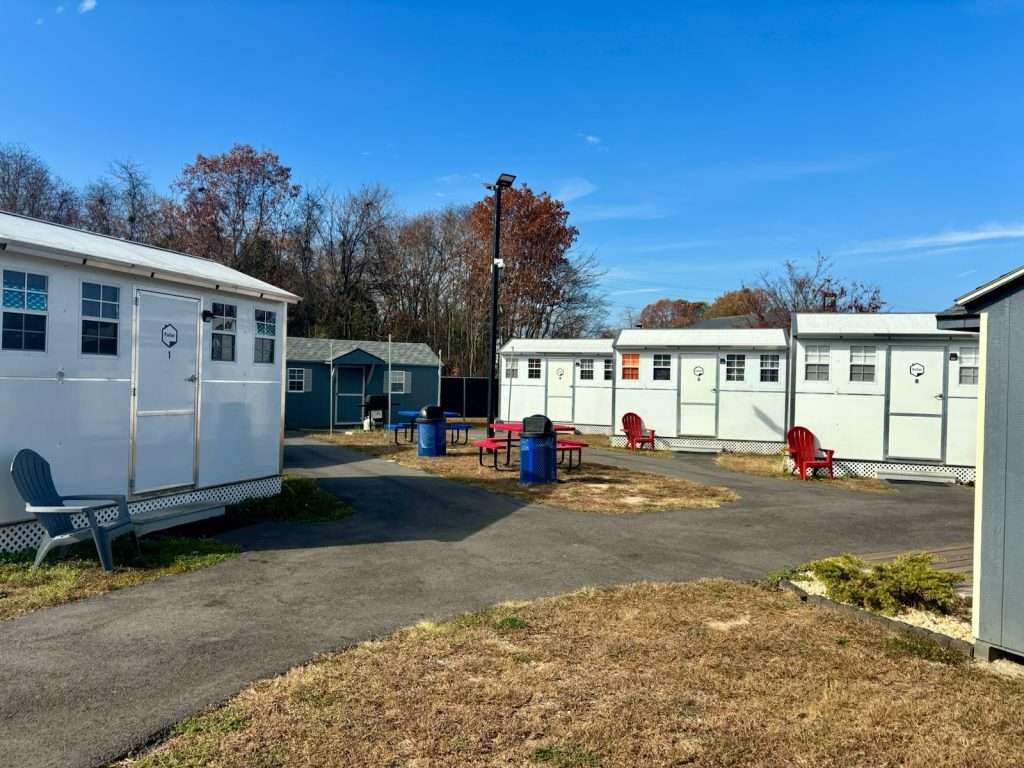
Village of Hope is leading the way as an unique transitional housing program – providing individuals with housing units or “tiny homes” in a neighborhood-like setting with shared living space, amenities, case management and referrals to services for up to six months. The Coalition requested that John Jay College of Criminal Justice evaluate the Village of Hope community, assess the effectiveness and benefits of this type of transitional housing program and outline their findings.
The Impacts of Housing Instability Among People Recently Released from Incarceration
Every individual deserves a place to call home. As the Coalition has highlighted in the past, individuals returning to society post-incarceration face enormous barriers to success – but one of the top barriers to successful reintegration is unstable housing and homelessness. The Coalition asked the Center for Effective Public Policy (CEPP) to review research pertaining to incarceration and homelessness, summarize the prevailing issues and highlight best practices in addressing the impacts of housing instability among individual recently released from the criminal justice system.
A prison classification system categorizes incarcerated individuals into groups by security needs, in order to assign them to the proper custody settings. Classifications are the basis for an individual’s programming, treatment needs, housing, work, visitation rights and other privileges. The Coalition asked the Center for Effective Public Policy (CEPP) to review and summarize best practices around the prison classification system and its impact on an incarcerated individual’s release decisions.
Exploring the Impact of Halfway Houses and the Use of Revocations
Across New Jersey, halfway houses and residential community reintegration programs help people transition back into communities as productive citizens. The Coalition asked the Center for Effective Public Policy (CEPP) to examine the best practices of halfway houses and residential community reintegration programs to determine what specific programming, structures and treatments reduce recidivism and help support an individual’s successful transition back into the community post incarceration. The report also focuses on the use and consequences of revocations for noncriminal actions in these programs, highlighting several promising opportunities for the future.
Evaluation Study of New Jersey's Residential Community Release Programs
While residential community reintegration programs (RCRPs), also sometimes referred to as “halfway houses,” continue to help individuals transition back into communities as productive citizens, emerging evidence has also shown that these facilities can have a significant impact on a individual’s likeliness to reoffend. The Coalition requested that the John Jay College of Criminal Justice examine and identify the best practices seen at these types of residential facilities to determine what programming, structures and treatments are most effective and, ultimately, help reduce recidivism.